Fastest-Growing Industries in the GCC & Skills You Need
Introduction
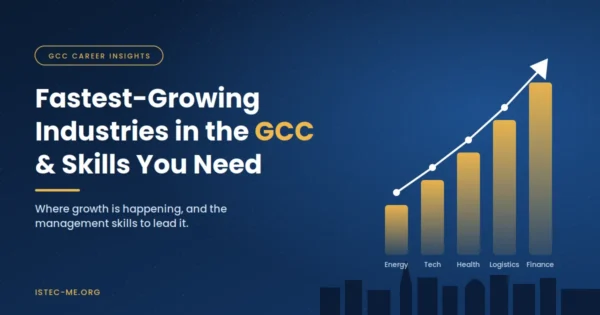
Technology, healthcare, renewable energy, tourism, and logistics are among the sectors creating new career opportunities across the Gulf Cooperation Council (GCC). As Gulf countries diversify their economies beyond oil, employers increasingly seek professionals who combine industry knowledge with management capabilities, digital fluency, and leadership skills. Understanding these trends can help professionals identify opportunities and develop the skills needed to progress in the GCC job market.
Why Is the GCC Growing Beyond Oil?
Countries across the Gulf Cooperation Council (GCC) are investing in initiatives to diversify their economies beyond oil. According to the World Bank’s Global Economic Prospects report, published in January 2026, economic growth across GCC countries is forecast to reach 4.4% in 2026 and 4.6% in 2027. The outlook reflects continued expansion in non-hydrocarbon activity alongside increased hydrocarbon production. The report notes that non-hydrocarbon activity accounts for more than 60% of the GCC countries’ total GDP and is expected to benefit from large-scale investments, including in Kuwait and Saudi Arabia. Increased oil production by OPEC+ countries and expanding natural gas production, including in Qatar, are also expected to contribute to growth.
These figures are economic forecasts, not guarantees of future performance or employment growth. Nevertheless, initiatives such as Saudi Arabia’s Vision 2030 and the UAE’s economic diversification programs illustrate the region’s efforts to develop sectors beyond oil.
Quick answer: Key sectors to monitor across the GCC include technology and artificial intelligence, renewable energy, healthcare and life sciences, tourism and hospitality, and logistics and supply chain management. Each requires specific technical or operational expertise, alongside transferable capabilities such as project management, data-driven decision-making, cross-cultural leadership, and performance improvement. Opportunities vary by country, occupation, employer, and skill requirements.
Five Industries to Watch in the GCC
The following sectors are relevant to the GCC’s economic diversification efforts and may offer opportunities for qualified professionals. They are not presented as a definitive ranking: growth rates and hiring demand differ across countries and industries.
Technology, AI, and Fintech
Companies across the GCC are adopting digital transformation strategies that affect their operations and business processes. Developments in artificial intelligence, cybersecurity, cloud computing, and digital payment systems are creating opportunities for professionals with technology and business management skills.
Potential roles include digital transformation manager, business analyst, fintech operations manager, and product manager. The qualifications required will depend on the position, employer, and level of technical responsibility.
Key skill: Data-driven decision-making. Managers must be able to analyze performance data, assess risks, and evaluate technology investments against business goals. Understanding how to interpret data can help them make informed decisions and measure the value of digital initiatives.
Illustrative example: A retail company in Dubai could use AI-driven demand forecasting to improve inventory management and reduce overstocking. A manager would evaluate whether the technology improves efficiency, controls costs, and supports business objectives.
Renewable Energy and Sustainability
Renewable energy and sustainability projects are becoming important parts of the GCC’s economic diversification efforts. The International Renewable Energy Agency’s (IRENA) Renewable Energy Markets: GCC 2023 report discusses the region’s renewable energy development and the potential for renewables to support climate action and economic diversification. It also highlights differences in renewable energy deployment and investment across GCC countries.
Potential career paths include renewable energy project manager, sustainability manager, and environmental, social, and governance (ESG) coordinator. Actual opportunities depend on project pipelines, investment decisions, technical requirements, and local regulations.
Key skill: Project and risk management. Managers need to coordinate budgets, suppliers, regulatory requirements, environmental objectives, and project deadlines. They must also identify risks and respond to changes that could affect project delivery.
Illustrative example: A project manager overseeing a solar installation coordinates contractors and suppliers, monitors costs, and tracks progress against the project schedule and sustainability targets.
Healthcare and Life Sciences
Healthcare infrastructure, service expansion, and demand for healthcare services are creating opportunities beyond clinical roles. Hospitals, healthcare networks, pharmaceutical businesses, and life sciences organizations need professionals who can manage operations, budgets, teams, quality standards, and projects.
Potential roles include healthcare operations manager, hospital administrator, quality improvement manager, healthcare project manager, and operations specialist in pharmaceutical or life sciences organizations. Some roles require specific technical qualifications, professional registration, or relevant industry experience.
Key skill: Healthcare operations management. Effective managers coordinate staffing, allocate resources, monitor service quality, and improve workflows while considering patient needs and regulatory requirements.
Illustrative example: A hospital operations manager reviews appointment schedules and staffing levels to identify ways to reduce waiting times and improve service delivery. Professionals interested in healthcare administration can explore ISTEC’s Master of Science (MSc) in Healthcare Management and review the program details to assess its relevance to their career goals.
Tourism and Hospitality
Tourism destinations, international events, hotels, and hospitality services contribute to the GCC’s efforts to diversify its economy. Tourism activity also creates demand for professionals who can manage guest experiences, service operations, events, and destination-related businesses.
The GCC Statistical Centre’s tourism statistics platform reports 75.7 million inbound tourists across GCC countries in 2025. This figure indicates the scale of tourism activity, but it should not be interpreted as a direct measure of job growth.
Potential roles include hotel operations manager, guest experience manager, and destination management specialist. Relevant experience, language skills, and service-sector knowledge may influence eligibility for particular positions.
Key skills: Customer experience management and cross-cultural leadership. Managers need to maintain service standards, lead diverse teams, respond to guest expectations, and resolve service issues effectively.
Illustrative example: A hotel manager reviews guest feedback and staff performance to identify opportunities to improve service quality, customer satisfaction, and operational efficiency.
Logistics and Supply Chain
The GCC’s position along major international trade routes support its role in shipping, aviation, e-commerce, manufacturing, and regional distribution. Ports, airports, warehouses, and supply chain networks rely on professionals who can coordinate suppliers, manage inventory, improve processes, and maintain reliable delivery schedules.
Potential roles include logistics operations manager, procurement manager, and supply chain manager. Employers may look for experience in operations, procurement, inventory planning, data analysis, and supplier management.
Key skills: Process optimization and vendor negotiation. Managers need to improve workflows, control costs, maintain supplier relationships, and respond to disruptions without compromising service reliability.
Illustrative example: A logistics manager reviews delivery routes, warehouse processes, and supplier contracts to identify ways to reduce delays and improve operational efficiency.
Management Skills in Demand Across GCC Industries
Although each sector has different operational requirements, several management skills in demand are valuable across the wider GCC job market. The table below connects each industry with a relevant management capability and its practical value.
Industry | Key management skill | Why it matters |
Technology, AI, and fintech | Data-driven decision-making | Helps evaluate technology investments and business performance. |
Renewable energy and sustainability | Project and risk management | Supports project delivery, risk assessment, and cost control. |
Healthcare and life sciences | Operations management | Improves resource allocation, coordination, and service quality. |
Tourism and hospitality | Customer experience and team leadership | Supports service standards, customer satisfaction, and team performance. |
Logistics and supply chain | Process optimization and vendor negotiation | Helps reduce delays, control costs, and improve reliability. |
Digital and AI Fluency
Digital and AI fluency helps managers understand how technology can improve productivity, support decision-making, and address business challenges. They do not necessarily need advanced programming expertise, but they should be able to assess digital tools, interpret relevant data, and understand their potential business value.
Multicultural Team Management
Many GCC workplaces bring together employees from different cultural and professional backgrounds. Clear communication, cultural awareness, conflict resolution, and collaboration can help managers build effective teams and support organizational goals.
Adaptability and Leadership
Adaptability helps professionals respond to changes in technology, market conditions, customer expectations, and business priorities. Leadership skills for the GCC also include setting clear goals, supporting team development, managing change, and making responsible decisions. Some positions will require additional technical qualifications, industry experience, or professional licensing.
How to Build These Skills While You Work
You do not necessarily need to leave your job to prepare for a management position. Work experience, professional development, short courses, and postgraduate education can all contribute to career progression. The right option depends on your current skills, target role, and long-term goals. An online business program may be worth considering if you want structured learning in leadership, finance, strategy, marketing, or operations while continuing to work. However, flexibility varies by program. Review the timetable, live sessions, assessments, workload, fees, and entry requirements before enrolling.
If you want to develop broader business and leadership knowledge, explore the MBA programs at ISTEC Business School. If you are at an earlier stage of your education or career, review the available BBA programs.
Frequently Asked Questions
1.Which Industry Is Growing Fastest in the GCC Right Now?
There is no single industry that can be identified as the fastest-growing across every GCC country and every measure of growth. Technology and artificial intelligence, renewable energy, healthcare, tourism, and logistics are important sectors to monitor. Their economic performance, hiring trends, and skill requirements vary by country and occupation.
2. What Management Skills Are Most in Demand in the UAE and Saudi Arabia?
Depending on the role and sector, employers may value data-driven decision-making, project management, digital fluency, financial literacy, change management, and multicultural team leadership. Requirements for experience, qualifications, and professional licenses vary by position.
3. What Are Some High-Demand Careers in the Gulf?
Potential career paths include digital transformation management, fintech operations, renewable energy project management, hospitality operations, supply chain management, and healthcare administration. Demand varies by country, employer, and level of experience, so candidates should review current vacancies and the qualifications specified for each role.
4. How Are Vision 2030 Careers Creating New Opportunities?
Saudi Arabia’s Vision 2030 supports economic and sectoral transformation, including initiatives related to tourism, technology, infrastructure, and other areas of diversification. These priorities may create opportunities in relevant occupations, but actual hiring depends on project requirements, investment, employer demand, and candidates’ qualifications.
4. Do I Need an MBA to Move into These Industries?
Not necessarily. An MBA is not a requirement for entering every industry discussed in this article. Some roles require technical knowledge, relevant work experience, industry-specific certification, or professional licensing. An MBA may help professionals develop broader management and leadership skills, depending on their experience and career goals.
5. Can I Study Online While Working Full-time?
Many online programs are designed for working professionals, but schedules, live classes, assessments, and workloads vary. Review the program details to determine whether the timetable and study requirements fit your availability before enrolling.
Conclusion
The fastest-growing industries in the GCC are closely connected to the region’s economic diversification efforts. Technology and AI, renewable energy, healthcare and life sciences, tourism and hospitality, and logistics all require specialized knowledge, while management capabilities such as leadership, project management, data-driven decision-making, and adaptability can be valuable across sectors.
However, industry growth does not automatically guarantee employment, and opportunities vary by country, employer, and occupation. Professionals can prepare by identifying the skills relevant to their target roles, gaining practical experience, and choosing suitable learning opportunities. If you are considering business education to strengthen your management capabilities, explore the MBA programs offered by ISTEC Business School and assess how the curriculum aligns with your career goals.