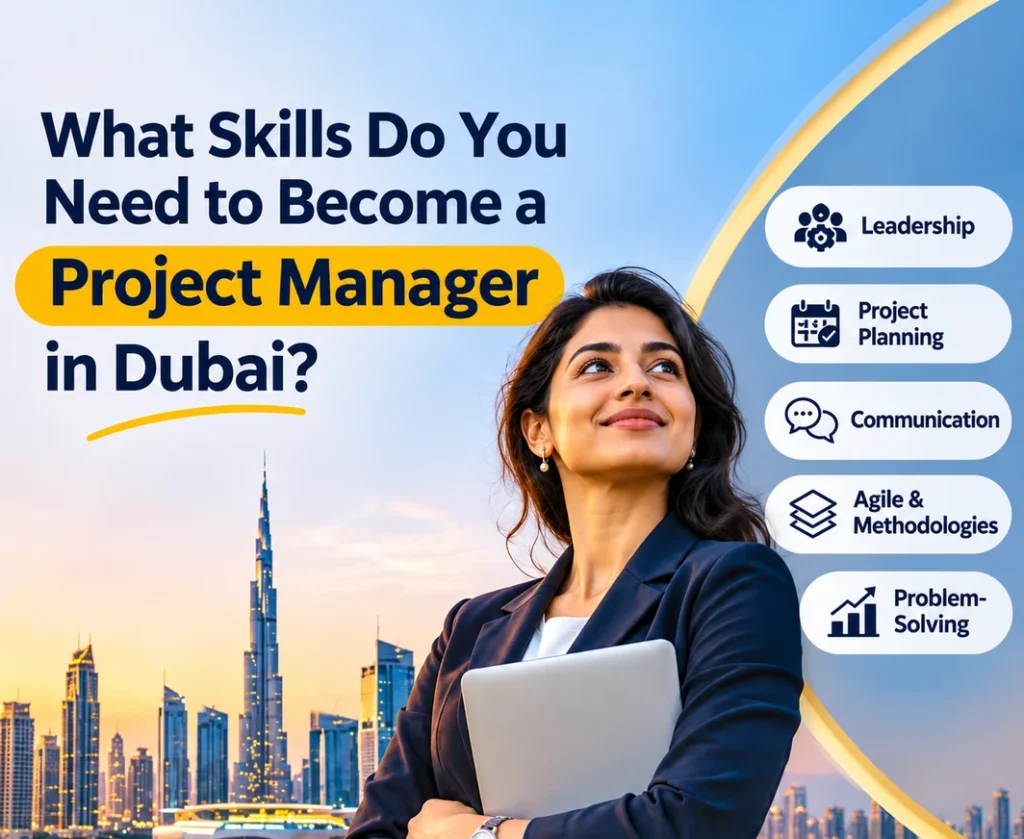
What Skills Do You Need to Become a Project Manager in Dubai?
Dubai’s construction, real estate, technology, and hospitality sectors rely on effective project management to coordinate people, resources, and deadlines. Project managers help turn business objectives into practical plans, monitor progress, and address challenges that may affect project delivery.
Understanding the skills needed to become a project manager in Dubai can help aspiring professionals prepare for the role. Beyond planning and scheduling, project managers need technical knowledge, leadership abilities, financial awareness, and the confidence to make informed decisions.
What Does a Project Manager Actually Do in Dubai?
A project manager oversees a project from initial planning to completion. Responsibilities include defining objectives, preparing budgets, allocating resources, coordinating teams, and monitoring progress against agreed timelines.
In Dubai, project management job roles can be found in a variety of sectors, such as
- Construction and real estate
- Infrastructure and engineering
- Information technology
- Logistics and supply chain management
- Hospitality and events
- Healthcare
For example, a project manager who takes the responsibility of managing a commercial building will require interaction with architects, contractors, suppliers, and other consultants to ensure that the process goes as per the time and budget framework set out by the project.
This role might vary according to the particular industry, but the basic aim remains the same.
The Core Technical Skills Every Project Manager Needs
Technical knowledge enables you to grasp the requirements of a project, manage its resources, and track its performance. These are the 6 essential project management skills in Dubai that can help you improve your job.
1. Planning and Scheduling
Project planning involves breaking down larger objectives into manageable tasks, setting milestones, and establishing realistic deadlines. Project managers must understand task dependencies and identify activities that could delay the overall schedule.
What this looks like day to day: Drawing up project schedules and task assignments and making sure that different activities are done in the proper sequence.
2. Budgeting and Cost Control
Project managers need financial awareness to estimate costs, prepare budgets, and monitor expenditure. Understanding budget variances helps them identify potential cost overruns and allocate resources more effectively.
What this looks like day to day: Checking expenditure, comparing actual spending to the budget, and explaining why this is or is not the case to management.
3. Risk Management
Unexpected issues can affect project timelines, costs, and quality. Risk management involves identifying potential problems early, assessing their possible impact, and preparing contingency plans.
What this looks like day-to-day: Planning for potential supplier issues, resource shortages, or scheduling conflicts and developing contingency plans.
4. Procurement and Contract Management
Many projects involve external suppliers, contractors, and service providers. Understanding procurement processes and contract terms helps project managers coordinate deliveries, monitor obligations, and manage supplier relationships.
What this looks like day to day: Making a comparison between the offers from different suppliers, monitoring deliveries, and monitoring the fulfillment of the agreed responsibilities.
5. Project Management Tools and Methods
To organize tasks, manage deadlines, and work together in teams, you need to be familiar with project management software. Knowledge of tools like Microsoft Project, Jira, or Trello is helpful. Additionally, it is important to be familiar with conventional project management techniques and Agile methodologies based on the project’s needs and context.
What this looks like day-to-day: updates to project schedules, task assignments, and tracking progress on a digital platform.
6. Reporting and Performance Monitoring
It is important that managers and clients are kept in the loop with frequent updates to ensure they know what is going on. Project data should be able to be interpreted and communicate the important performance indicators (KPIs).
What this looks like day to day: Creation of progress reports, identification of delays, and reporting on key progress to decision makers.
The People Skills That Set You Apart
Though technical knowledge will help you arrange your project, people skills will determine how good you are at working with others.
These are some of the core skills that are required:
- Leadership: Provide direction to the team members, task distribution and maintaining concentration on the team’s goals.
- Communication: Giving clear instructions and being open with clients, co-workers, and management.
- Stakeholder management: Professional relationships with clients, executives, suppliers, and other project participants.
- Negotiation and conflict Resolution: Conflict management, discussion of change, and practical solutions where priorities differ.
Think about a scenario in which a supplier is late with a key shipment. Rather than pointing fingers at the supplier or causing problems, the successful project manager will communicate the situation, discuss other options, and let the team know the new timeline.
Smoothly imparting information and maintaining composure is as crucial as knowing the technical details.
Skills That Matter Specifically in Dubai
There are some professional concerns that you should keep in mind while working in Dubai. The city is home to workers and companies from various nations, which makes working on a multicultural team a crucial component of many projects.
These are some areas to work on:
- Cultural awareness: Understand that colleagues and clients may communicate differently and have different professional expectations and working practices.
- Multicultural communication: Communicate effectively with individuals of diverse languages and cultures.
- Know how to coordinate documentation, permissions, and approvals specific to the industry your project is in.
- Initiative: Take the initiative in tackling new challenges, projects, and deadlines with multiple stakeholders.
- Professional etiquette: Learn how to communicate and build relationships in the local business environment professionally.
These skills can support you in successfully navigating different work environments in Dubai.
How to develop these skills and demonstrate them. It’s not a requirement to start your career as a project manager. Practical experience can be gained by doing your current job and then building up to more advanced roles.
How to Build These Skills and Prove Them
You don’t necessarily need to begin your career in a project manager position. You can develop relevant experience through your existing responsibilities and gradually take on more complex assignments.
Here are some practical ways to get started.
1. Start with Small Projects
Volunteer to coordinate a team activity, manage a workplace initiative, or organize a small business project. These experiences help you practice planning, communication, and decision-making.
2. Consider Professional Certifications
Certifications can provide structured knowledge of project management principles. Credentials such as Project Management Professional (PMP) and PRINCE2 are worth exploring. Check their respective eligibility and examination requirements before applying.
Those researching project management certification in Dubai can compare available training providers, certification pathways, and preparation options.
3. Consider a Postgraduate Qualification
A postgraduate program can help you develop a broader understanding of business operations, financial management, and leadership.
An MBA in Project Management in the UAE can be an option for professionals who want to combine project management knowledge with wider management skills. EdStone Global can guide prospective learners in exploring relevant MBA programs through its university partners.
4. Explore Flexible Learning Options
For those already employed, an online course might be the best option, as you can continue working while you are enrolled in a course of study.
A good way to do this is to undertake basic training, gain experience in the workplace, and perhaps get certified and further education to build your resume.
Frequently Asked Questions
1. Do I Need a degree to Become a Project Manager in Dubai?
While it’s not always required, the right degree may enhance your career prospects.
2. Is PMP Certification Required in Dubai?
While not mandatory for all jobs, some companies consider PMP certification when hiring project management personnel.
3. Can I Become a Project Manager Without Experience?
You could indeed start with experience in project coordination, administration, and/or team management and then move into project management.
4. How Long Does It Take to Become a Project Manager?
It is based on educational attainment, previous experience, industry, and professional development.
Conclusion
Developing the skills needed to become a project manager in Dubai requires a combination of technical knowledge, practical experience, and leadership abilities. Your profile can be further enhanced by professional certifications and post-graduate studies. Visit EdStone Global‘s website for MBA courses and see what you can learn that will help you with your career.